Final Field Season Comes to a Close!
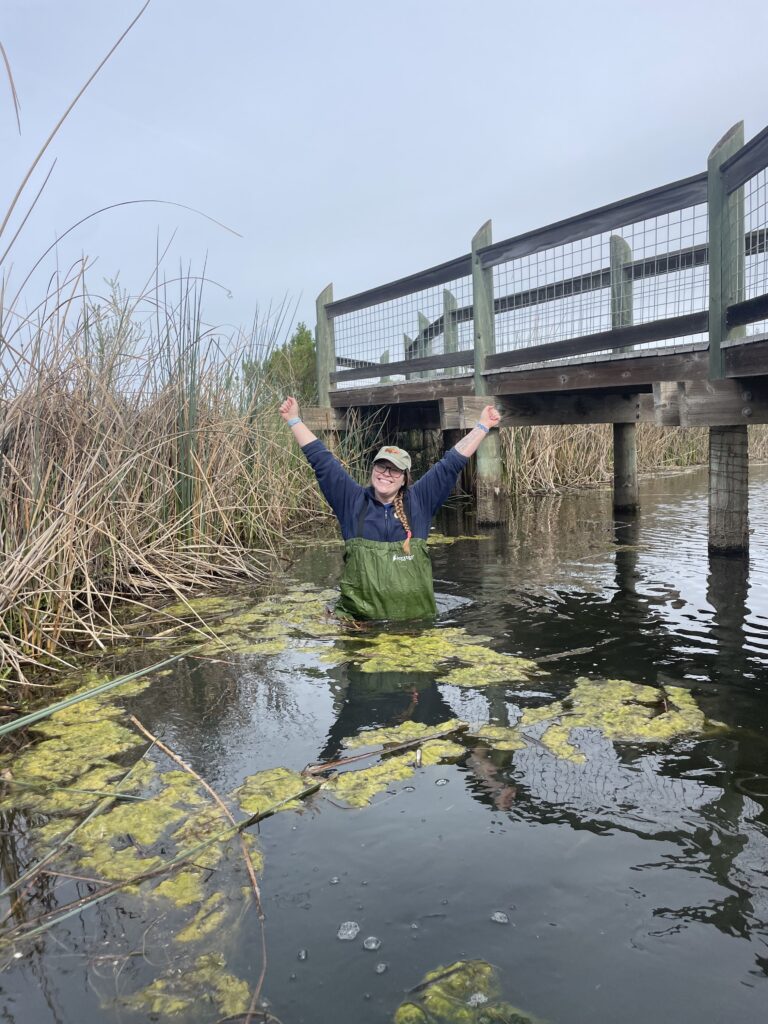
The 2025 Project Phoebe field season officially wrapped up at the end of last month! The end of this final field season marks the conclusion of Project Phoebe’s fieldwork–a bittersweet moment for our team. We are so incredibly grateful to all the people who have made our work possible over the past few years, including the site managers and community members who helped us find and access nests, our incredible team of undergraduates, and our advisors and collaborators. This project would not have been possible without all of you, and we (the Project leads) want to give you a heartfelt thank you.
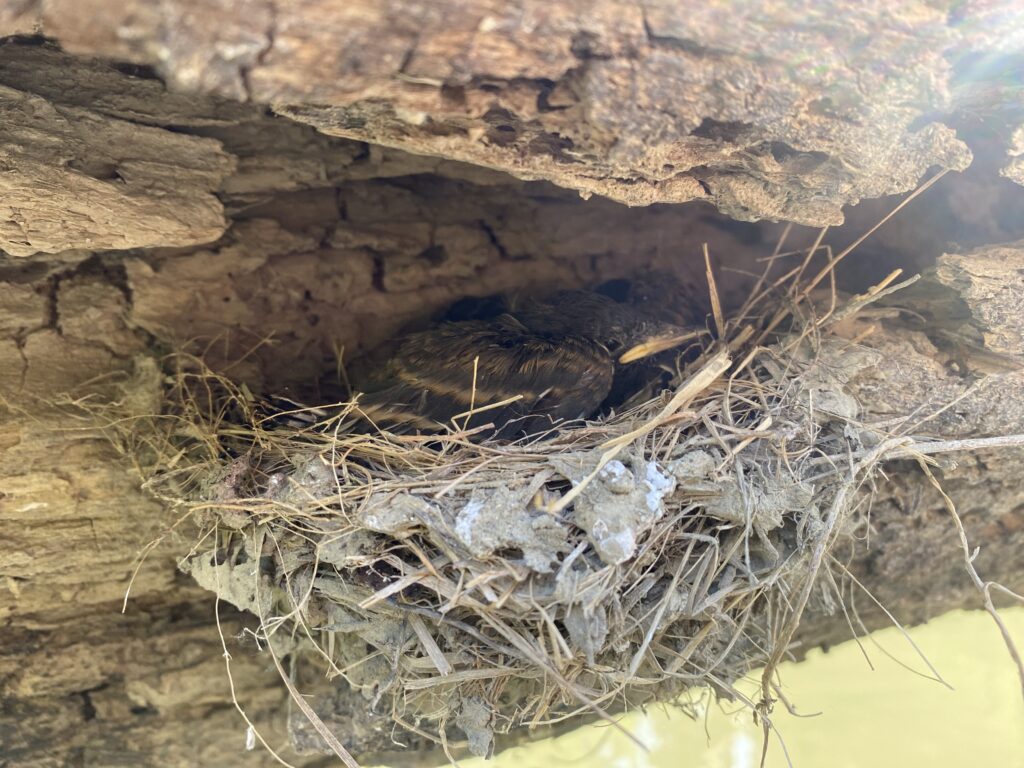
This season, we monitored 49 nesting attempts for 25 breeding pairs of Phoebes–our smallest field season! Our focus was on collecting detailed information about the behavior of banded Phoebe pairs, where we can distinguish the two parents at the nest–males and females look the same at a distance, so we need the bands to tell them apart! Of these nesting attempts, ~61% successfully made it to fledging age, which is similar to the success rate of our other two seasons. However, a greater proportion of our nests failed this year due to eggs that never hatched, with no identifiable cause. Relatively fewer nests were lost to predation, the nest falling, and heat waves. Our impression is that this summer was a cooler one, with a lot fewer heat waves that negatively impacted the birds, but we have yet to formally analyze these data–stay tuned!
Although we observed nest building behavior earlier this season than in previous years, we did not find out first eggs until May 14th, nine days later than last year. And our final brood of chicks hatched on June 22nd, over two weeks earlier than last season. Our 2024 field season was much longer than either of our other two seasons. The three years of our study have been climatically quite different from one another, but we are not sure why exactly the breeding period was so long in 2024.
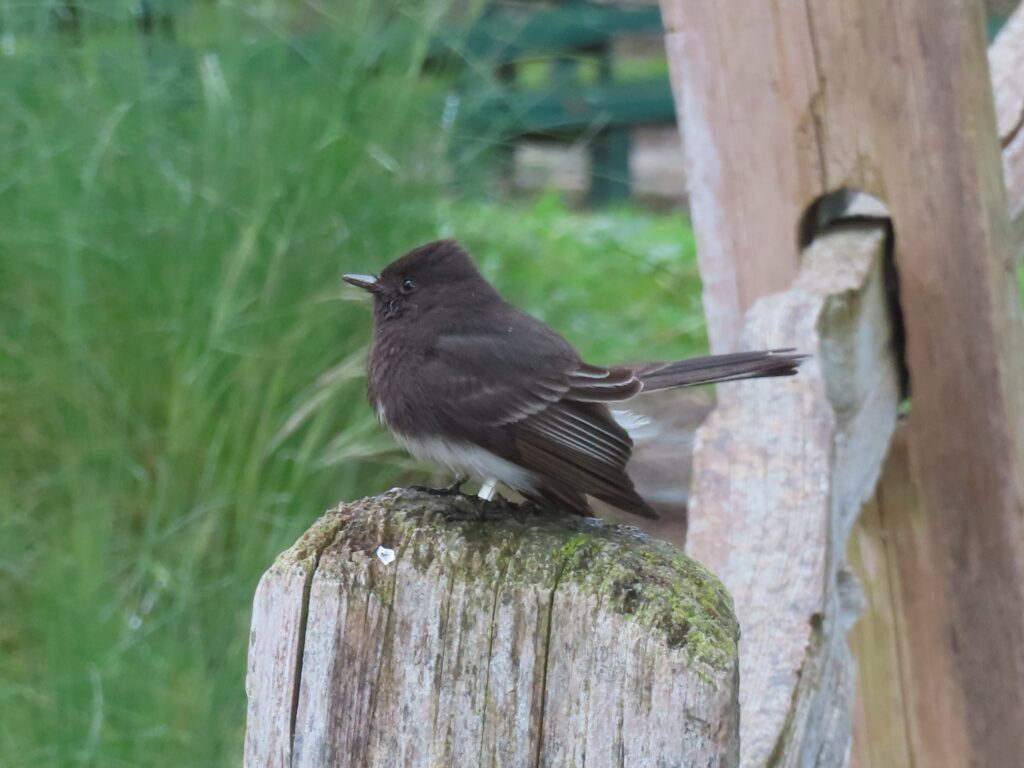
Now that fieldwork is done, we are focused on processing and analyzing our data, including measuring Black Phoebe parental care behavior from over 600 days of nest videos and completing lab work to assess the physiological health of our birds. It’ll be a few years before our work is complete, but in the meantime, you can check out our display at the Cache Creek Nature Preserve’s visitor center this Fall and tune in for our talk at the November Sacramento Audubon Society meeting!
